A species refers to a group of individuals having a common evolutionary trajectory. It is important to understand which individuals belong to what species if we are interested in keeping things alive for some period of time. There are five different species concepts that can be used for identifying different species: Phylogenetic, Ecological, Biological, Morphological, and the Unified Species Concept.
Mantis Shrimp have over 450 species which can be distinguished by all of these species concepts, but we will focus on the Phylogenetic and Morphological species concepts because they are the most straight forward.
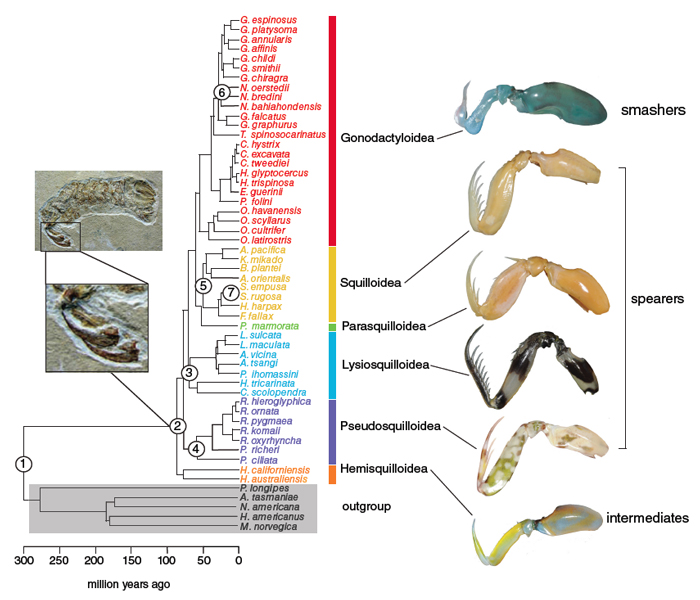
The Phylogenetic species concept states individuals form a single species when they make a monophyletic group (when considering a common ancestor and all descendants). To form an accurate phylogeny, scientist gather molecular and genetic data. This data is helpful in understanding the shared evolutionary history and the evolution of gene flow. Below, the phylogenetic tree of the mantis shrimp can be seen. There are seven super families of Mantis shrimp. The common ancestor for all these families emerged 300 million years ago!
Interestingly, the mantis shrimp family can be found in the same habitats all along tropical waters. The ecological species concept states individuals form two species when they occupy different ecological niches. While useful to describe the interactions species have with each other and their environment, mantis shrimp are found in much the same places.

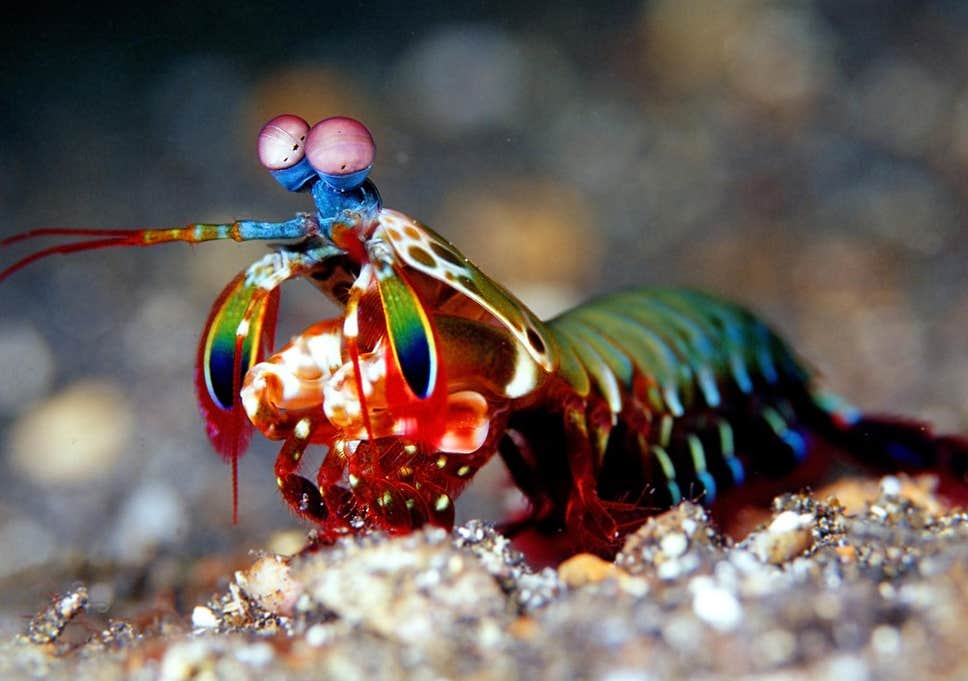
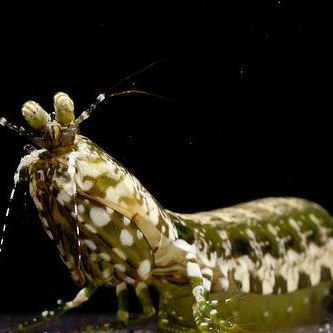
Mantis Shrimp are either spearers are smashers. The super family Gonodactyloidea are differentiated from the rest of mantis shrimp based on their smasher claws and behavior. Morphological species concept states species have important morphological traits that can distinguish them from other species. This concept is very straight forward because these traits are visible. For instance the coloration of peacock mantis shrimp, false mantis shrimp (left), and zebra mantis shrimp (right) are different from each other, which makes them distinguishable as three species.
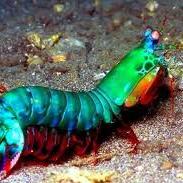
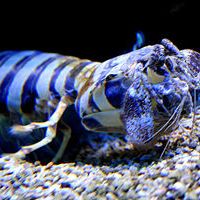
The Biological species concept states individuals form two species when they are no longer able to interbreed and have viable offspring. This concept is intuitive, but impractical. With over 450 species, the time to observe successful mating and successful offspring would be unrealistic.
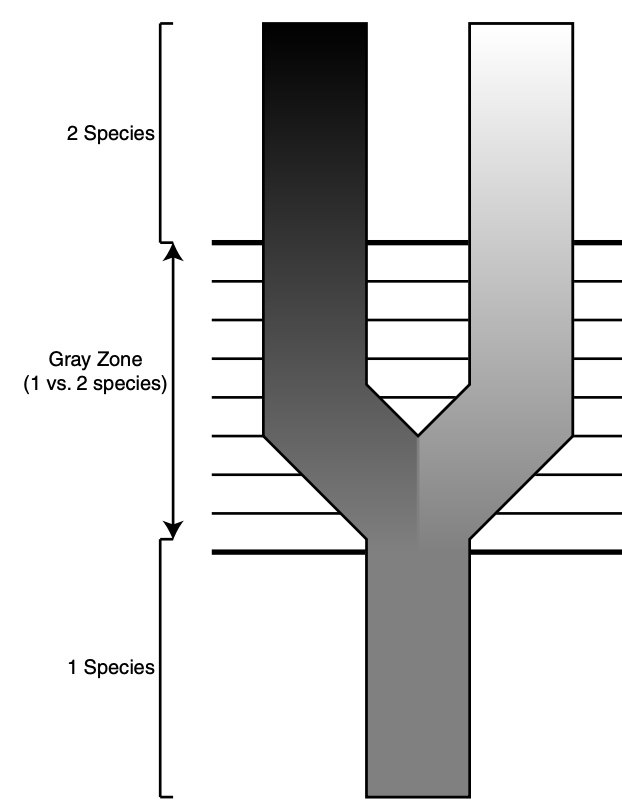
The unified species concept was proposed by Kevin De Quiero. Many biologists can agree on this new idea; it merges all of the species concepts. Basically, there will be times individuals are clearly one species and times individuals will be clearly two species. The times in between include a gradient in which speciation is happening.
There is an approximately 450 species of mantis shrimps that are known. Species of mantis shrimps have a variety range in colors, from having brown coloration to a very bright colorful mantis shrimp.
Odontodactylus scyllarus (peacock mantis shrimp) is the one of the famous, larger, colorful species of mantis shrimps that are also known as clown mantis shrimp and painted mantis shrimp due to their vivid colorations.
 Biological Brilliance