Conservation biology is the management of nature and of Earth’s biodiversity with the aim of protecting species, their habitats, and ecosystems from excessive rates of extinction and the erosion of biotic interactions.
There are some factors affecting ocean conservation, such as pollution, overharvesting, and habitat destruction. Thus, these factors can cause coral reef declines.
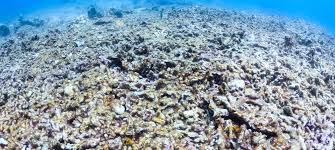
Even though peacock mantis shrimp is not directly endangered, coral reefs that make its home cavities are in decline which makes the cavities or burrows a growing limited resource.
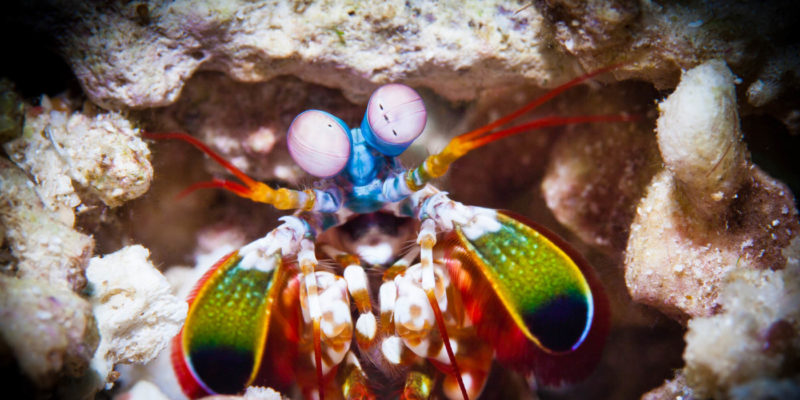
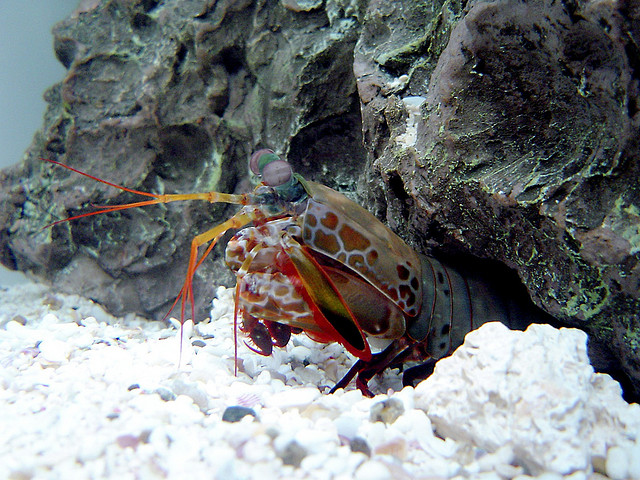
Mantis shrimp (even thought they are not rare) are a delicacy in Asian countries. Trawling (fishing with nets) has had a significant impact on the mantis shrimp populations. As a result, numbers of benthic fish have increased significantly in these ecosystems.
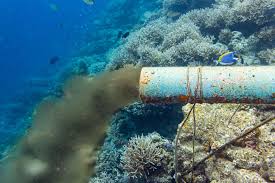
Importantly, pollution in oceans negatively impact all creatures in the sea. This includes the coral reefs that make the mantis shrimp’s burrows. As a reminder, the burrow does not only serve as a home, but a safe refuge to consume the prey the mantis shrimp hunts. Peacock mantis shrimp are very sensitive to environmental pollutants; Researchers have discovered they are a good bioindicator of pollution and indicate the quality of both water and coral reefs.
Mantis shrimp play important roles in marine ecosystems. They are close to the top of the food chain, and the destruction of their natural habitats and death of prey may put the matis shrimp at risk in the future.
Ocean conservation efforts are extremely important for not only protecting our beloved mantis shrimp species but the diverse life found within the oceans.
 Biological Brilliance